
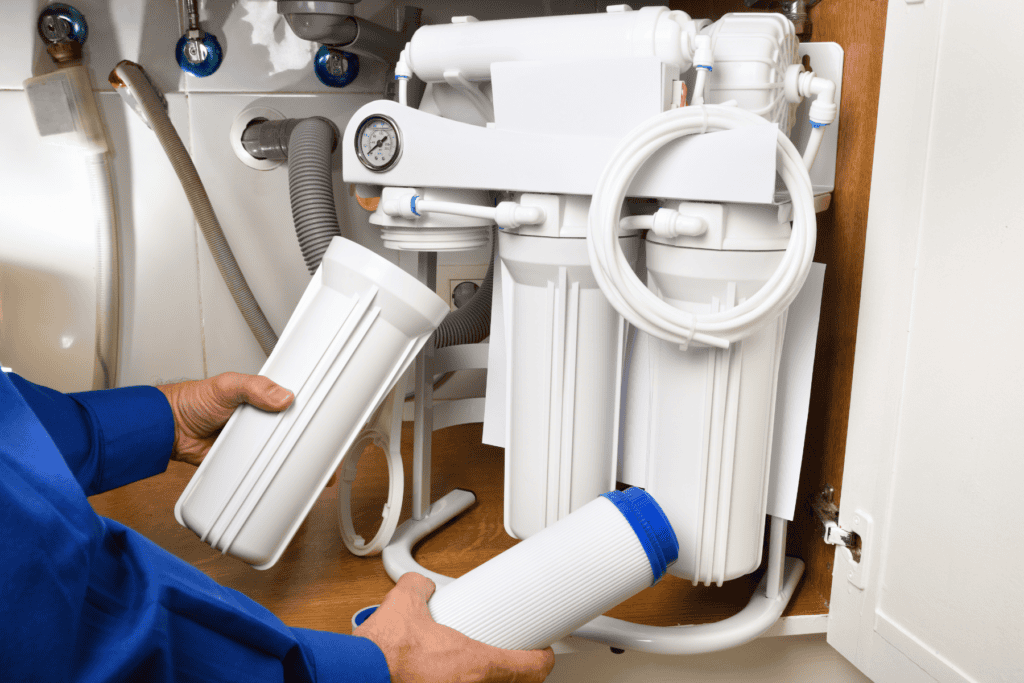
Reverse osmosis can be a practical solution for homeowners who want cleaner, better-tasting water directly from the tap. These systems reduce dissolved solids, unwanted minerals, and other contaminants that may affect water quality. Understanding how reverse osmosis works, what it removes, and how it compares with other filtration methods can help you decide whether it is the right fit for your Oxford, PA, home.
What Is Reverse Osmosis Water?
Reverse osmosis water is tap water that passes through a specialized filtration system to remove dissolved solids and contaminants. If you’re asking, “What is reverse osmosis water?”, it is water purified by forcing tap water through a semipermeable membrane under pressure. This tight membrane allows clean water molecules to pass while trapping microscopic impurities.
Many local homeowners install a reverse osmosis system under the kitchen sink to improve drinking water quality. Tap water contains varying amounts of minerals, chlorine, and trace compounds. A reverse osmosis water filtration unit removes specific taste and purity issues at a single tap. If you want better drinking water, exploring plumbing services in Oxford, PA, can help you choose the right system.
How Does Reverse Osmosis Work?
Standard osmosis moves water from a low-mineral concentration to a higher-mineral concentration across a membrane. Reverse osmosis reverses this process using household water pressure. Pressure pushes tap water through a semipermeable membrane, separating pure water from dissolved compounds.
A home drinking water system uses several steps to protect the membrane and clean the water:
- Sediment Pre-filter: Traps rust, dirt, and silt before water reaches the membrane.
- Carbon Pre-filter: Reduces chlorine, which protects the delicate membrane from damage.
- Semipermeable Membrane: Filters out microscopic dissolved solids and heavy metals.
- Post-filter: Polishes the water to improve taste before it reaches your tap.
Together, these filtration stages help reduce a wide range of common water contaminants while improving taste, odor, and overall water quality. The membrane performs most of the fine filtration, while the pre-filters help extend system life by removing larger particles and chlorine before they can cause damage. Regular filter replacement keeps a reverse osmosis system operating efficiently and producing consistently clean drinking water.
What Does Reverse Osmosis Remove?
Systems certified under NSF/ANSI 58 standards remove up to 99% of lead, 95% of total dissolved solids (TDS), and over 90% of fluoride. They also remove up to 97% of chlorine and municipal treatment additives that affect taste and smell. Actual reduction depends on filter quality, incoming pressure, and regular maintenance. No single filter removes every contaminant. Homeowners in Oxford, PA, should check equipment ratings to ensure they remove target contaminants.
Reverse osmosis systems can also reduce substances such as arsenic, nitrates, copper, and certain dissolved salts, depending on the membrane and filter configuration. Because water quality varies by location and source, homeowners should review local water reports or consider professional testing before selecting a system. Matching the filtration system to the contaminants present in your water helps ensure better overall performance.
Is Reverse Osmosis Water Good for You?
Reverse osmosis filtration removes dissolved minerals like calcium and magnesium along with harmful contaminants. While drinking water contains small amounts of minerals, you get most essential nutrients from a balanced diet. Some people prefer water with added minerals for flavor. Remineralization filters can add beneficial calcium and magnesium back into purified water. This stage restores a fresh taste without reintroducing harmful impurities.
For most households, reverse osmosis water can be a practical option for improving drinking and cooking water quality. Removing excess dissolved solids and unwanted compounds may also improve the taste of coffee, tea, soups, and other foods prepared with tap water. Homeowners who prefer a more mineral-rich flavor can choose a system with a built-in remineralization stage.
Is Reverse Osmosis Water Safe?
Reverse osmosis water is safe for daily drinking when produced by a properly maintained unit. By reducing lead, nitrate, and synthetic chemicals, it provides clean drinking water for your household. Replacing pre-filters and post-filters on schedule keeps the system safe. Regular filter changes prevent clogging and keep your water fresh.
Proper installation also plays an important role in maintaining safe water quality. A poorly fitted membrane, neglected storage tank, or overdue filter replacement can reduce system performance over time. Following the manufacturer’s maintenance schedule and having the system inspected when water pressure, taste, or odor changes can help keep filtration consistent.
Is Reverse Osmosis Water the Same as Distilled Water?
Reverse osmosis and distillation both purify water, but they use different methods. Distillation boils water into steam and condenses it back into liquid. This process leaves solid impurities behind in the boiling chamber. Reverse osmosis uses household water pressure instead of heat. An under-sink system operates efficiently without high energy costs, making it a practical choice for daily kitchen use.
The two methods can also differ in convenience and the types of contaminants they address. Distillers typically process water in batches and require electricity to create steam, while reverse osmosis systems can supply filtered water continuously from a dedicated faucet. For everyday household use, reverse osmosis often offers a more convenient option when homeowners want purified water available on demand.
Deciding If a Reverse Osmosis Water System Fits Your Home
Your choice depends on your goals, space, and household water usage. Reverse osmosis units work best at a single tap, such as your kitchen sink. If you want to treat hard water across your whole home, a water softener or whole-house filter may be a better option.
Consider these practical factors before installing a system:
- Water Goals: Decide if you need pure water at one faucet or treatment for the entire house.
- Water Pressure: Reverse osmosis membranes require standard household pressure to filter water effectively.
- Filter Care: Pre-filters need regular replacement to protect the main membrane.
- Available Space: Standard units require space under the sink for filters and a storage tank.
- Wastewater Creation: The process sends wastewater down the drain as it flushes away contaminants.
Reviewing these factors helps you select the right equipment for your home. Working with an experienced technician ensures proper installation and reliable performance for local homeowners.
Summary of Reverse Osmosis Water Filtration
Understanding “what is reverse osmosis water” helps you choose the best treatment for your home. By using water pressure and a semipermeable membrane, reverse osmosis removes up to 99% of lead and 95% of total dissolved solids. Optional remineralization filters restore natural minerals for better flavor.
Selecting the right system depends on your water quality goals and available space. Proper filter maintenance keeps your unit running efficiently for years.
Contact Oxford Plumbing, Heat & Air for Water Treatment Solutions
If you want cleaner drinking water in your home, contact Oxford Plumbing, Heat & Air. Our licensed plumbers have served local homeowners since 1951 with honest recommendations and professional service. Contact us today to schedule a water quality evaluation or to discuss filtration options for your kitchen sink.