
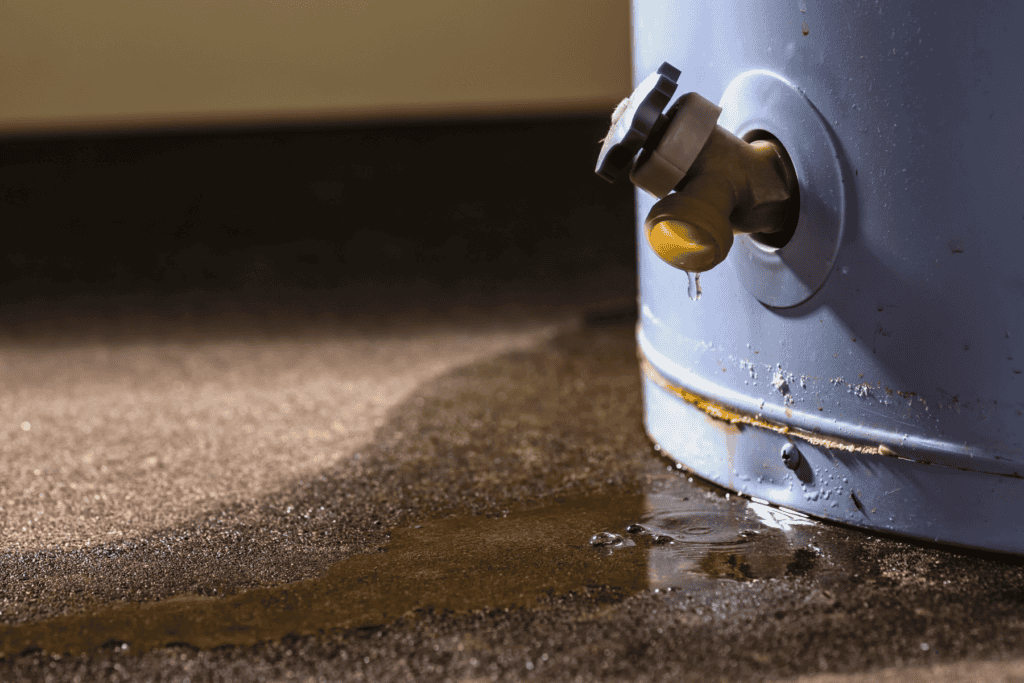
Finding water on the floor around your appliance is stressful for any homeowner. However, a leaking water heater doesn’t always mean you need a new unit right away. Small puddles often start from simple issues like a loose plumbing fitting or routine condensation. Standing water can also indicate internal tank corrosion that requires a full replacement. Identifying the source of moisture helps you decide whether a quick repair will work or whether a licensed technician must evaluate the system.
Why Is My Water Heater Leaking?
Finding the cause of a hot water heater leaking starts with checking upper pipe fittings and surrounding components. Water flows downward due to gravity, so puddles on the floor often begin near the top of the tank. Loose connections, failing valves, or corroded fittings can allow water to travel along the outside of the unit before collecting at the base. Carefully inspecting the area above and around the tank can help determine whether the leak comes from a repairable component or the tank itself.
Water Heater Leaking From the Top
When water leaks from top connection points, the cold water inlet or hot water outlet pipes are usually responsible. Thermal expansion and normal household vibrations loosen pipe fittings over time. Shut-off valves above the tank can also develop worn rubber washers, allowing water to trickle down the outer jacket.
Another common cause near the top is a temperature and pressure relief valve. According to the International Plumbing Code, safety valves discharge water when tank pressure exceeds 150 psi or temperatures surpass 210 degrees Fahrenheit. High water pressure or thermal expansion forces this valve open to protect the tank from rupture.
Moisture near the top or sides can also be simple atmospheric condensation. During humid summer months, cold incoming water cools the outer casing. Moisture in the air condenses on the metal and drips down to the floor, creating light moisture rather than a steady stream.
What Causes a Water Heater to Leak?
To determine the cause, plumbers inspect both moving parts and the unit’s casing. Plumbing systems operate under continuous water pressure, placing constant strain on valves, gaskets, and joints. Oxford Plumbing, Heat & Air provides comprehensive plumbing services in Oxford, PA, to fix these issues before minor drips cause floor damage.
Water Heater Drain Valve Leaks
A leaking drain valve is a common, repairable issue. Located near the bottom of the tank, this valve allows plumbers to flush sediment during annual maintenance. Plastic drain valves become brittle with age, while brass valves collect mineral deposits that prevent a tight seal. When the valve fails to seal completely, a steady drip forms at the threads.
Excessive System Pressure and Temperature
High water pressure and thermal expansion place severe stress on water heaters. Under standard residential plumbing guidelines, incoming water pressure should stay between 40 and 80 psi. When water heats up, it expands inside the closed tank. If your home lacks an expansion tank or if the existing tank fails, internal pressure spikes. The safety valve then releases water onto the floor to relieve the pressure.
Why Is My Water Heater Leaking From the Bottom?
A leak near the bottom usually comes from either the drain valve or the steel storage tank itself. A leaking tank indicates internal corrosion. Standard water heaters use an inner steel vessel protected by a sacrificial anode rod. Leading manufacturers note that anode rods last three to five years. Once the rod wears out, water minerals attack the bare steel wall until a leak forms.
You cannot safely patch or weld a rusted steel tank. Once rust perforates the tank wall, replacing the water heater is the only permanent solution. A professional technician can evaluate the tank to confirm whether it has failed structurally.
Is a Leaking Water Heater Dangerous?
Standing water presents immediate safety hazards to your home. Unmanaged water damages subflooring, drywall, and nearby building materials. Even a slow leak can seep into hidden areas and weaken materials over time. Moisture in enclosed utility closets also encourages mold growth, especially when airflow is limited, and the area remains damp for extended periods.
Water pooling near gas burners or electrical junction boxes creates serious risks. Water contact can short-circuit electrical components or rust gas control valves. It may also damage wiring, sensors, and other parts that help the water heater operate safely. Turning off power or gas during an active leak protects your home and the heating equipment while reducing the risk of further damage.
What Should I Do When My Water Heater Leaks?
Acting quickly prevents minor plumbing leaks from causing severe structural damage. Even a small leak can spread to nearby flooring, drywall, insulation, or stored belongings if left unaddressed. Water around the base of the unit can also create electrical or slip hazards, so homeowners should treat any active leak seriously. If you notice a leak in your utility room, follow these simple steps to protect your home:
- Locate the source: Check whether moisture comes from overhead pipes, the safety valve, the drain spigot, or the tank casing.
- Clear the area: Move personal items and electronics away from standing water.
- Shut off the water supply: Turn the cold water shut-off valve clockwise to stop water from filling the tank.
- Turn off the power source: Switch off the circuit breaker for electric units or turn the gas valve to the off position for gas models.
- Call a professional plumber: Contact a licensed technician to inspect the unit and complete necessary repairs.
Avoid patching a rusted tank yourself. Corrosion on the tank body often indicates internal deterioration that sealants or temporary patches can’t permanently fix. A professional inspection can determine whether a valve, fitting, or supply line can be repaired or whether the water heater needs replacement. If you need assistance, Oxford Plumbing, Heat & Air delivers reliable plumbing & heating services in Oxford, PA, to keep local homes safe.
Protecting Your Home From Water Heater Leaks
Understanding why leaks occur helps you take control before serious water damage happens. Valve or upper pipe leaks can often be repaired quickly. In contrast, an aging storage tank with internal corrosion requires complete unit replacement. By checking fittings regularly and acting fast when water appears, you protect your property and extend equipment service life. Our team provides quality repairs and system replacements across Chester County.
Contact Oxford Plumbing, Heat & Air for Water Heater Repairs
If you suspect a leaking water heater tank, do not wait for minor drips to cause major floor flooding. Oxford Plumbing, Heat & Air has provided trusted residential service since 1951, bringing over 60 years of expertise to local homeowners. Our licensed technicians offer straightforward advice, upfront pricing, and reliable solutions for all your water heating needs. We also provide complete HVAC services in Oxford, PA, to keep every system running smoothly. Contact Oxford Plumbing, Heat & Air today to schedule your water heater inspection or repair.